
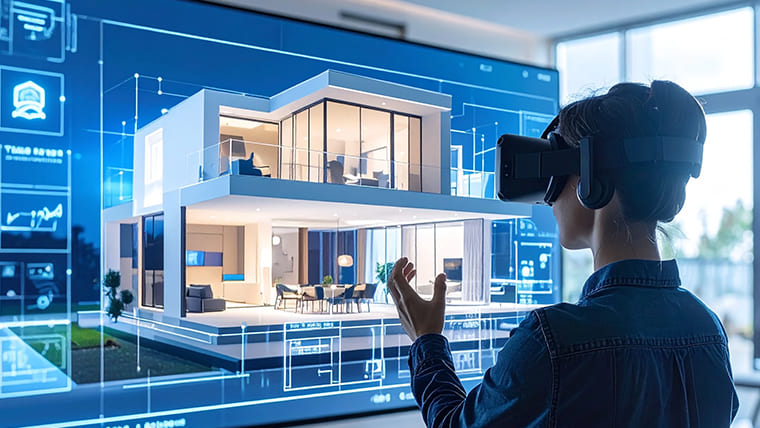
The Digital Transformation of Real Estate
The real estate market has always depended heavily on physical interaction. Buyers used to spend weeks visiting multiple properties, scheduling meetings with agents, and reviewing endless paperwork before making a final decision. That traditional process worked for decades, but modern buyers now expect speed, convenience, and digital accessibility. Technology has completely reshaped consumer behavior, and the real estate industry is adapting rapidly to meet these changing expectations.
Think about how online shopping changed retail. People no longer want to drive from store to store comparing products when they can view everything from their phones. The same shift is happening in real estate. Buyers now want to explore homes, apartments, commercial buildings, and luxury properties without physically traveling to each location. This demand gave rise to immersive technologies like virtual tours, AR, and VR solutions that create realistic property experiences from anywhere in the world.
Recent market research shows that the global virtual tour market is expected to grow significantly over the next few years, with projections reaching billions of dollars in market value by 2030. Real estate businesses adopting these technologies are seeing faster lead conversions, higher engagement rates, and improved customer satisfaction. Buyers feel more confident when they can virtually walk through a property and understand the layout before booking an actual visit.
Companies such as Pixel Values Saudi Arabia are playing an important role in helping the industry transition into this digital future. By offering High-Quality Software Development Services in Riyadh, they are enabling developers and real estate agencies to build smart, scalable, and immersive property platforms that improve business performance and customer experience simultaneously.
Understanding Virtual Tours in Real Estate
Virtual tours have become one of the most effective marketing tools in modern real estate. Unlike static photographs, virtual tours allow users to move through a property digitally, exploring rooms, layouts, and interiors in an interactive way. These tours replicate the feeling of physically walking inside a property, giving buyers a more realistic understanding of space, design, and functionality.
There are several types of virtual tour technologies available today. The simplest format includes 360-degree panoramic tours where users can rotate views and navigate between rooms. More advanced systems use fully interactive walkthroughs powered by VR headsets, enabling users to experience depth, scale, and movement just like a real visit. Some platforms even include clickable hotspots that provide detailed property information, measurements, and customization options.
The impact of virtual tours on buyer behavior is remarkable. Studies show that buyers spend significantly more time viewing listings with immersive tours compared to traditional image galleries. This increased engagement often leads to faster inquiries and stronger emotional connections with the property. Real estate agents also benefit because virtual tours filter out unqualified buyers, saving time and reducing unnecessary site visits.
Another major advantage is accessibility. International investors, remote buyers, and busy professionals can explore multiple properties without traveling. This convenience speeds up the entire decision-making process. Imagine trying to sell a luxury apartment in Riyadh to a buyer living in London or Dubai. Without AR/VR technology, arranging physical visits could take weeks. Virtual experiences eliminate those delays and bring buyers closer to making immediate purchasing decisions.
How AR and VR Are Revolutionizing Real Estate
Augmented Reality and Virtual Reality are often mentioned together, but they serve different purposes in real estate. Augmented Reality (AR) overlays digital elements onto real-world environments, while Virtual Reality (VR) creates fully immersive digital spaces. Together, these technologies are changing how properties are designed, marketed, and sold.
AR allows buyers to visualize furniture placement, interior decoration, and renovation possibilities directly through smartphones or tablets. Imagine pointing your phone at an empty living room and instantly seeing how it would look with luxury furniture, modern lighting, or different wall colors. This feature helps buyers emotionally connect with the property because they can personalize it before making a purchase decision.
VR, on the other hand, provides complete immersion. Buyers can wear VR headsets and walk through digital versions of homes, offices, or commercial properties as though they were physically present. This is especially useful for off-plan projects and under-construction developments. Developers no longer need to rely solely on blueprints and brochures. Instead, they can showcase fully interactive virtual environments that allow buyers to experience the final project before construction is completed.
Industry experts believe immersive technologies are becoming a standard expectation rather than a luxury feature. According to reports, around 77% of prospective buyers prefer using VR to view properties remotely. These technologies also help agents build trust because buyers gain a clearer and more transparent understanding of property layouts and features.
This transformation requires strong technological infrastructure and innovative software solutions. Businesses searching for the Best Software Development Company in Riyadh often turn to Pixel Values Saudi Arabia because of our expertise in building scalable AR/VR platforms tailored for real estate and enterprise applications.
Benefits of AR/VR Solutions for Real Estate Businesses
The biggest reason real estate businesses are investing in AR/VR technologies is simple: we help close deals faster. In a competitive market, speed matters. Buyers who can fully understand and visualize a property are more likely to make quicker purchasing decisions. Immersive technologies remove uncertainty and create stronger emotional engagement, which directly impacts conversion rates.
One of the most important benefits is reduced sales cycles. Traditional property selling often involves multiple site visits, long discussions, and delayed decision-making. Virtual tours simplify the process by giving buyers immediate access to detailed property experiences. Research indicates that listings with VR tours can sell up to 31% faster than those without immersive features. This speed is incredibly valuable for developers managing large inventories of residential or commercial units.
AR and VR also reduce operational and marketing costs. Physical staging, printed brochures, and repeated site visits can be expensive. Virtual staging allows developers to showcase furnished interiors digitally without investing in actual furniture or decoration. This technology is particularly beneficial for newly constructed or empty properties where buyers may struggle to visualize the final look.
Customer engagement improves dramatically as well. Buyers spend more time exploring immersive listings, and this extended interaction increases the likelihood of conversion. It’s similar to test-driving a car before buying it. Once buyers feel emotionally connected to a property, the chances of closing the deal become much higher.
Businesses that adopt these technologies early position themselves as innovative and trustworthy brands. In markets like Saudi Arabia, where digital transformation is accelerating rapidly, companies providing High-Quality Software Development Services in Riyadh are becoming essential partners for real estate firms aiming to remain competitive.
Why Buyers Prefer Virtual Property Experiences
Modern buyers value convenience more than ever before. Nobody wants to waste time traveling across cities to view properties that may not match expectations. Virtual tours and AR/VR experiences solve this problem by allowing buyers to evaluate properties remotely before scheduling physical visits.
For international buyers and investors, immersive technology is almost a necessity. A buyer sitting in another country can explore a luxury villa in Riyadh or a commercial office in Jeddah without boarding a plane. This capability expands the reach of real estate businesses far beyond local markets. It opens opportunities to attract global investors who may otherwise hesitate because of travel limitations.
Another reason buyers love virtual experiences is transparency. Traditional photos can sometimes be misleading because they only show selected angles. Virtual walkthroughs provide a complete and realistic perspective of the property layout, room sizes, and spatial flow. Buyers feel more confident because they can examine every corner of the property on their own terms.
AR technology also improves visualization. Empty spaces often fail to inspire buyers emotionally, but AR staging can instantly transform them into beautifully furnished homes. This creates a stronger emotional reaction and helps buyers imagine themselves living in the space. Emotional connection is one of the most powerful drivers in real estate purchasing decisions.
The psychological impact of immersion cannot be ignored. Walking through a virtual property creates familiarity and attachment even before a physical visit occurs. It’s almost like previewing a movie trailer that excites you enough to buy a ticket immediately. Real estate businesses using immersive technologies are tapping directly into this emotional decision-making process, which explains why they are closing deals much faster than competitors relying on traditional marketing methods.
The Role of Software Development Companies in Real Estate Innovation
Technology alone is not enough. Real estate businesses need reliable software partners capable of building customized solutions that align with their goals, branding, and operational requirements. This is where software development companies become crucial players in the digital transformation journey.
A generic platform may provide basic functionality, but customized software solutions offer flexibility, scalability, and competitive advantages. Real estate companies often require integrated systems combining property management, customer relationship management, virtual tours, analytics dashboards, AI recommendations, and mobile applications. Developing these sophisticated ecosystems requires deep technical expertise.
Pixel Values Saudi Arabia has emerged as a trusted technology partner for businesses seeking advanced digital transformation solutions. Known as a Best Software Development Company in Riyadh, the company delivers innovative applications tailored to modern business needs. Our expertise extends across AR/VR development, enterprise software, mobile applications, and cloud-based platforms.
What makes customized software development so valuable in real estate is adaptability. Every agency and developer operates differently. Some focus on luxury residential projects, while others specialize in commercial spaces or smart city developments. Tailored software ensures that businesses can create unique customer experiences instead of relying on one-size-fits-all solutions.
The Saudi Arabian market is rapidly embracing smart technologies as part of its digital transformation vision. Real estate businesses that collaborate with companies offering High-Quality Software Development Services in Riyadh are better positioned to meet evolving customer expectations and stay competitive in a fast-changing market.
e-Procurement Suite and Real Estate Operations
Real estate projects involve extensive procurement activities. Developers must manage vendors, suppliers, contractors, materials, and service providers efficiently to keep projects on schedule and within budget. Traditional procurement processes are often slow, paperwork-heavy, and prone to errors. This is why digital procurement systems have become increasingly important for modern real estate businesses.
An e-Procurement Suite simplifies procurement operations by automating vendor management, purchase approvals, invoice processing, and supplier communication. Instead of relying on manual workflows, businesses can manage everything through centralized digital platforms. This not only improves efficiency but also enhances transparency and accountability across projects.
For large-scale real estate developments, procurement delays can significantly impact construction timelines and profitability. An advanced e-Procurement Suite reduces these risks by streamlining approvals, tracking inventory, and improving coordination between teams. Developers gain real-time visibility into procurement activities, enabling faster and smarter decision-making.
Integration with AR/VR systems creates even more value. Imagine a developer using immersive technology to showcase a smart building while simultaneously managing supplier procurement through integrated enterprise software. This combination creates a seamless digital ecosystem that improves both customer-facing experiences and internal operations.
Companies like Pixel Values Saudi Arabia are helping businesses implement such advanced solutions. Our enterprise platforms and procurement technologies support organizations looking to modernize workflows and improve operational efficiency in highly competitive industries.
Future Trends in AR/VR Real Estate Technology
The future of real estate is becoming increasingly immersive, intelligent, and data-driven. AR and VR technologies are evolving rapidly, and their integration with Artificial Intelligence is creating entirely new possibilities for property marketing and customer engagement.
AI-powered virtual tours are one of the most exciting developments. Instead of simply navigating through a property, buyers can interact with intelligent virtual assistants that answer questions, recommend features, and personalize the experience in real time. These systems can analyze buyer preferences and highlight property features most relevant to individual users.
Smart city development is another major trend shaping the future of real estate technology. Urban planners and developers are using immersive digital twins to visualize entire communities before construction begins. Buyers can explore neighborhoods, transportation systems, schools, and amenities within fully interactive virtual environments.
The adoption of AR/VR hardware is also expected to grow significantly. Industry analysts predict major increases in AR/VR headset shipments as devices become more affordable and user-friendly. This wider adoption will make immersive property experiences even more accessible to mainstream consumers.
Saudi Arabia is particularly well-positioned for this transformation due to its strong focus on digital innovation and smart infrastructure development. Businesses investing in immersive technologies today are preparing themselves for a future where virtual property exploration becomes the standard rather than the exception.
Conclusion
Virtual tours and AR/VR solutions are no longer futuristic concepts reserved for luxury brands or tech giants. They have become powerful business tools helping real estate companies attract buyers, improve engagement, and close deals faster. Immersive technologies eliminate geographical barriers, reduce decision-making time, and create stronger emotional connections between buyers and properties.
The numbers clearly show the growing impact of AR/VR in real estate. From increased inquiries and faster sales cycles to improved customer satisfaction and lower marketing costs, the benefits are impossible to ignore. Businesses that fail to embrace these technologies risk falling behind competitors who are already redefining customer expectations.
As the demand for digital property experiences continues to rise, software innovation will play an even bigger role in shaping the future of the industry. Companies like Pixel Values Saudi Arabia are helping organizations stay ahead through immersive technologies, enterprise solutions, and High-Quality Software Development Services in Riyadh.
The future of real estate is immersive, intelligent, and highly interactive. Buyers no longer just want to see properties — they want to experience them before making decisions. Businesses that understand this shift are the ones closing deals faster and building stronger customer relationships in the digital age.
FAQs
- What are virtual tours in real estate?
Virtual tours are interactive digital experiences that allow buyers to explore properties remotely using 360-degree views, videos, or VR environments.
- How does AR help real estate businesses?
AR helps buyers visualize furniture placement, renovations, and interior designs within real spaces using smartphones or tablets.
- Why are VR property tours becoming popular?
VR tours provide immersive experiences that help buyers understand property layouts better, increasing confidence and speeding up purchasing decisions.
- What is an e-Procurement Suite in real estate?
An e-Procurement Suite is a digital platform that automates procurement processes such as vendor management, purchasing, approvals, and inventory tracking.
- Why choose Pixel Values Saudi Arabia for software solutions?
Pixel Values Saudi Arabia offers customized enterprise software, AR/VR development, and innovative digital transformation services for modern businesses.